Many medical, med spa, wellness, and specialty clinic websites have the same problem: the website is online, the services are listed, the business is real, but the site is not consistently producing new patient inquiries from Google.
That does not always mean the design is bad. A website can look clean and still be difficult for Google to understand, difficult for patients to navigate, and difficult for your team to track after someone reaches out. The better question is not “Do we have a website?” The better question is: “Is this website built to turn local searches into scheduled next steps?”
1. A good-looking website can still be invisible.
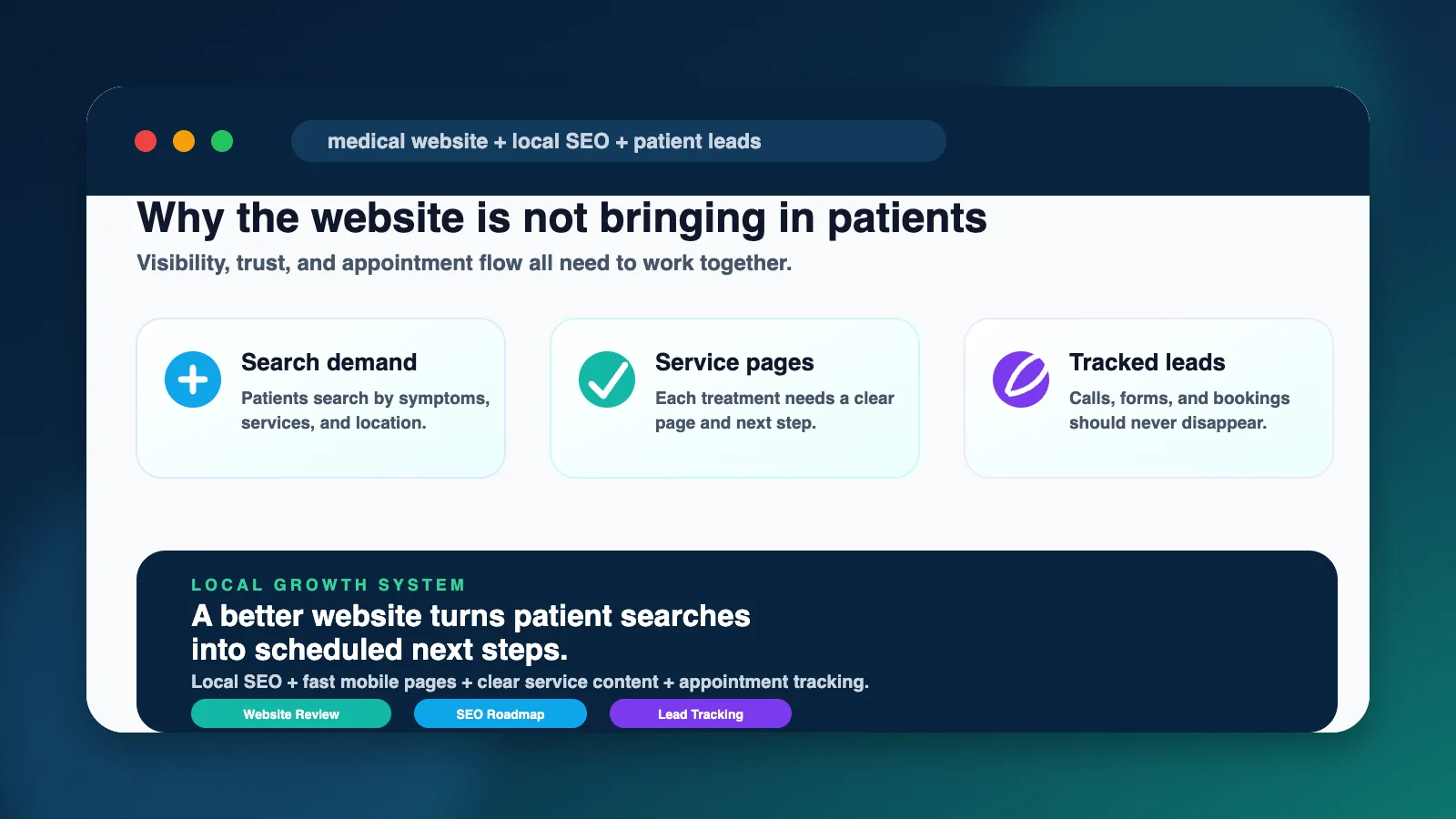
Patients do not always search for your business name first. They search for the problem they are trying to solve: med spa near me, medical weight loss, vascular doctor, IV therapy, Botox, hormone therapy, pilates classes, dental implants, or a specific condition or service in their city.
If your website only has a short homepage and a generic services list, Google has very little context to match your business with those searches. That is why a business can spend money on social media or ads while still missing organic traffic from people who are already looking for the service.
2. Each important service needs its own page.
One “Services” page is rarely enough for a medical or wellness business. A better structure gives each high-value service its own clear page with the right local context, patient-friendly explanation, frequently asked questions, and a direct call-to-action.
For example, a med spa should not only list “weight loss” in a small section. It should have a dedicated page for medical weight loss that explains who it is for, what the consultation process looks like, what questions patients usually ask, and how to request an appointment.
3. Local SEO is built from trust signals.
Google and patients both need consistent trust signals. That includes your business name, address, phone number, hours, service area, reviews, photos, provider information, Google Business Profile, and matching information across the website.
For clinics and wellness businesses, trust also comes from how clearly the website explains the service. Patients want to know who they are contacting, what the practice focuses on, what the next step is, and whether the business feels organized before they call.
4. Mobile visitors need a faster path to action.
Most local searches happen on a phone. If your mobile site is slow, crowded, hard to read, or missing clear call and appointment buttons, potential patients may leave before your team ever knows they were interested.
A strong patient-focused website should make the next step obvious: call, request an appointment, ask a question, or submit a form. Those actions should be easy to use without zooming, hunting through menus, or scrolling past unrelated content.
5. Tracking matters because not every lead becomes a form submission.
Some people call. Some click a booking link. Some fill out a form. Some visit the contact page, leave, and come back later. If you are only checking website traffic, you are missing the real business question: which pages and searches are creating qualified opportunities?
At minimum, your website should track form submissions, phone clicks, booking clicks, and the pages that generate those actions. That gives you a better way to decide what content to improve, which services deserve more attention, and whether your advertising is producing real leads.
6. The website should support follow-up after the inquiry.
Getting the lead is only the first step. The request still needs to be answered, logged, followed up, and connected to the right service or staff member. For growing practices, the website should connect with a CRM, support inbox, or workflow that keeps inquiries from getting lost.
This is where a website becomes more than a brochure. It becomes part of the business system: service pages bring in the right visitors, forms collect useful context, calls and bookings are tracked, and your team has a clear process for follow-up.
What a medical or wellness growth website should include.
A strong local growth website usually includes a clear homepage, dedicated service pages, provider or team information, location details, Google Business Profile support, schema, analytics, Search Console, conversion tracking, fast mobile performance, and a recurring SEO plan to keep improving after launch.
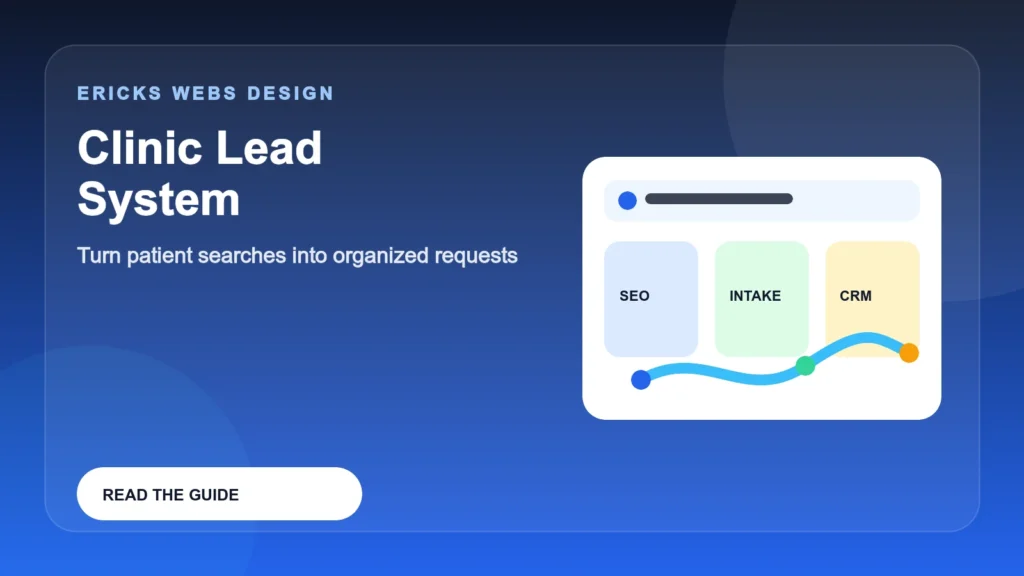
For more advanced businesses, the website can also connect with appointment requests, intake forms, payments, memberships, patient education, automated reminders, CRM records, and monthly performance reporting.
Next Step
Want to know if your website is costing you local patient leads?
We can review your current website, service pages, local SEO structure, mobile experience, conversion tracking, and follow-up process. You will get a practical roadmap showing what to improve first.