
Owned vs Rented Attention
Website vs Facebook page.
Facebook can help your business stay active, but it should not be the only place customers can learn, trust, and contact you.
Build Owned Presence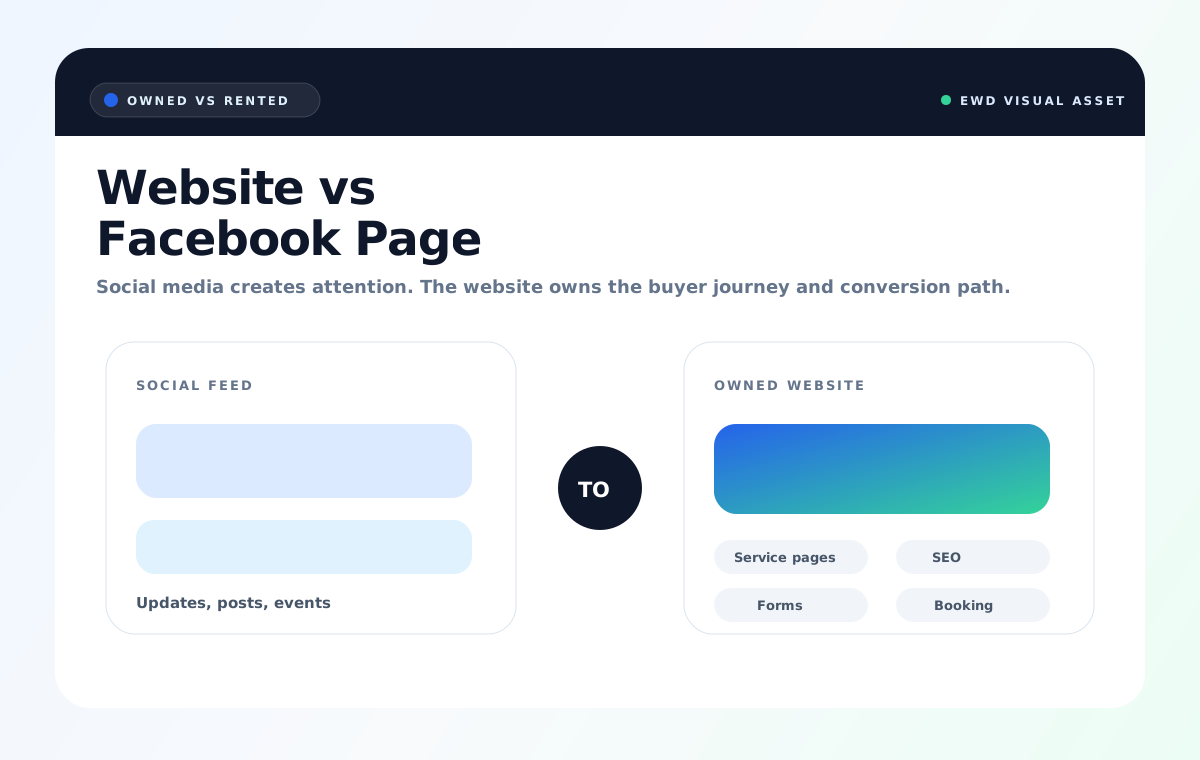
Facebook Page
- Good for updates and community interaction
- Useful for reviews, events, and quick posts
- Limited control over layout and buyer journey
- Search visibility is limited compared to service pages
- Algorithms decide who sees your content
Business Website
- Owned platform with your structure and message
- Dedicated pages for each service and location
- Forms, bookings, payments, and quote flows
- Better foundation for Google search and local SEO
- Designed around conversion, not scrolling feeds
Best Strategy
Use social media to feed the website.
The website should be the hub. Facebook, Instagram, ads, business cards, vehicles, emails, and referrals should all send buyers back to a page built to convert.
Example Scenarios
Where Facebook helps, and where the website takes over.
Put on social media:
- Quick updates and behind-the-scenes posts
- New photos, videos, events, and promotions
- Community interaction and reputation activity
- Links that send traffic to focused website pages
Put on your website:
- Full service pages, pricing guidance, and FAQs
- Forms, booking, checkout, and lead routing
- Search-focused content and location pages
- Proof, process, policies, and trust signals
Common questions.
Should I delete my Facebook page?
No. Keep it active, but use it as a channel. The website should be the main hub for search, trust, and conversions.
Can Facebook rank on Google?
Sometimes, but it cannot replace dedicated service pages, location pages, structured content, and conversion-focused design.
What should go on my website that is not on Facebook?
Service details, process, FAQs, pricing guidance, proof, forms, booking, payment options, location pages, and content built for search.